
Planning EV charging for a home or small business
15 November 2026
Plan EV charging around parking, electrical capacity, charging time, access controls and current UK grant conditions before requesting quotes.
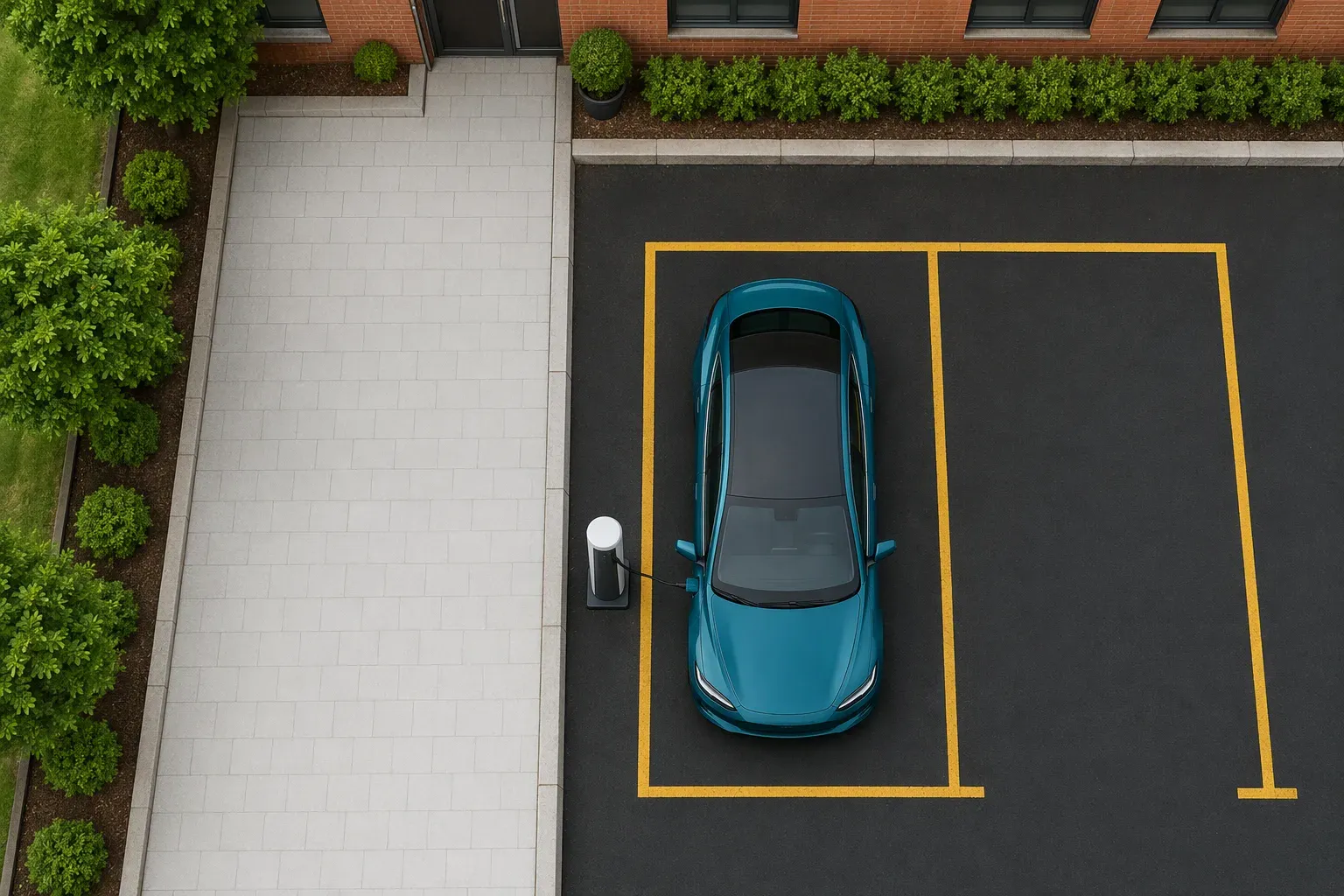
Planning EV charging starts with where vehicles park, how long they stay and whether the electrical supply can support the proposed chargers. Decide those points before choosing a device. Homes and small businesses share the same site checks, but businesses also need clear rules for access, billing and maintenance.
UK guide. Regulations and grant information checked on 15 November 2026.
Define what your EV charging needs to do
Write down the vehicles you expect to charge, typical daily mileage, arrival and departure times, and whether drivers need a full battery or simply enough energy for the next journey. Use vehicle information and actual driving patterns rather than choosing the fastest-looking charger.
At home, a car parked overnight may have a long charging window. At a workplace, a staff car parked all day is different from a delivery vehicle returning between shifts. A customer staying briefly creates another requirement again.
Keep immediate needs separate from future expansion. Asking for provision for additional chargers can be sensible, but it should be costed separately from installing them now.
Check parking rights and cable routes
Confirm you control the parking space and have any landlord, freeholder or site-owner permission needed. Shared parking needs agreement about bay allocation and who can use the equipment.
A charger location should be assessed alongside vehicle charging-port positions, cable reach, accessibility, lighting and protection from vehicle impact. Avoid a layout that depends on trailing a cable across a pavement or a busy walking route.
For on-street parking, do not assume you can run a cable from your home across the highway. Ask the local authority about permitted solutions and permissions before making plans. A grant scheme does not itself grant permission to alter a pavement.
Bring a simple site sketch to the installer: bays, entrances, pedestrian routes, electrical intake and the likely charger position. Photographs can help, but do not open electrical equipment to obtain them.
Ask for an electrical-capacity assessment
A competent installer should assess the supply, existing electrical installation, other loads and proposed charging demand. Ask whether any distribution network operator approval, notification or supply upgrade is needed, who will arrange it and what happens if the network imposes conditions.
For a small business, consider peak demand from heating, machinery, kitchens or other equipment. Several chargers operating together need a different assessment from one charger used overnight. If charging is part of a wider energy project, our business-premises energy assessment guide helps you assemble demand data, occupancy terms and project objectives.
Load management means controlling charging demand so it stays within an agreed limit. Ask what the proposed system measures, how it prioritises vehicles and how it behaves if communications fail. It is not a substitute for assessing the supply.
Choose charging power around the available time
A simple energy calculation can make an enquiry more specific. If a vehicle needs 20 kWh replenished over eight hours, the average energy requirement is 2.5 kW before allowing for charging losses. That is an illustrative planning calculation, not a charger specification or a promised charging time.
The actual result depends on the vehicle's charging capability, charger output, available supply, losses and controls. A device with a higher advertised rating will not necessarily deliver that rate to every car or on every site.
Ask the installer to explain why the proposed rating meets your use case and what changes if two or more vehicles connect at once.
Check smart controls and ongoing costs
The Electric Vehicles (Smart Charge Points) Regulations guidance applies to relevant private domestic and workplace chargepoints sold in Great Britain. It is not a blanket rule for every UK chargepoint or public charging installation.
Ask the supplier about compliance, scheduling, supplier interoperability, connectivity and what functions remain available without an internet connection. A tariff-linked offer should be assessed against the whole electricity contract, not just its advertised charging period.
If you are also considering solar panels, our questions to ask a solar installer cover generation and direct-use assumptions. Tell both installers when the vehicle will be parked and available to charge rather than assuming solar generation and charging demand coincide.
For workplaces, clarify:
- Who can start a charging session: staff, fleet drivers, visitors or the public?
- Will access use an app, card or another method?
- How will electricity use and payments be recorded?
- Are there software, connectivity, transaction or support fees?
- Can the equipment continue to operate if you change service provider?
If you intend to offer public charging, request advice on the separate public-chargepoint requirements rather than treating it as a private staff installation.
Check the right grant before commissioning work
Funding depends on the applicant, site, installer and scheme conditions. The GOV.UK changes from 1 April 2026 state that relevant home and workplace grants are funded until 31 March 2027.
At the check date, the Workplace Charging Scheme offers eligible applicants up to £500 per socket, for up to 40 sockets across their sites. The flats and renters grant also has a maximum of £500 for an eligible socket. These are maximum contributions, not automatic awards or the full installed cost.
Start with the current chargepoint grants overview, then read the individual scheme's country coverage, parking conditions, authorised-installer rules, approval process and deadlines. Do not assume every homeowner qualifies, or that one scheme's rules apply to another.
Request a complete installation and operating quote
Ask for equipment, groundwork, cable runs, electrical alterations, network work, protective measures, testing and commissioning to be itemised. Separate one-off installation costs from ongoing management and maintenance charges.
For a hypothetical two-bay workplace, a useful brief is: “Two staff cars stay from morning to late afternoon. We need controlled access, usage records and a quote for shared load management, plus a separate price for future expansion.” The installer can then assess a defined requirement rather than guess from “we need two chargers”.
Agree who handles faults, inspections, account administration and user support. At handover, request relevant electrical certification, operating instructions and a demonstration of the controls.
Next step: search for EV charging providers
UK Energy & Renewables helps customers discover energy businesses, including EV charging providers. A listing is not an endorsement; check the provider's competence, scheme authorisation where relevant and written scope yourself.
Search the directory using an EV charging keyword and your town or postcode, with your site brief ready.