Choosing a solar installer: questions to ask before a quote
15 November 2026
Compare solar installers with questions about roof surveys, equipment, output estimates, permissions, written quotes and aftercare.
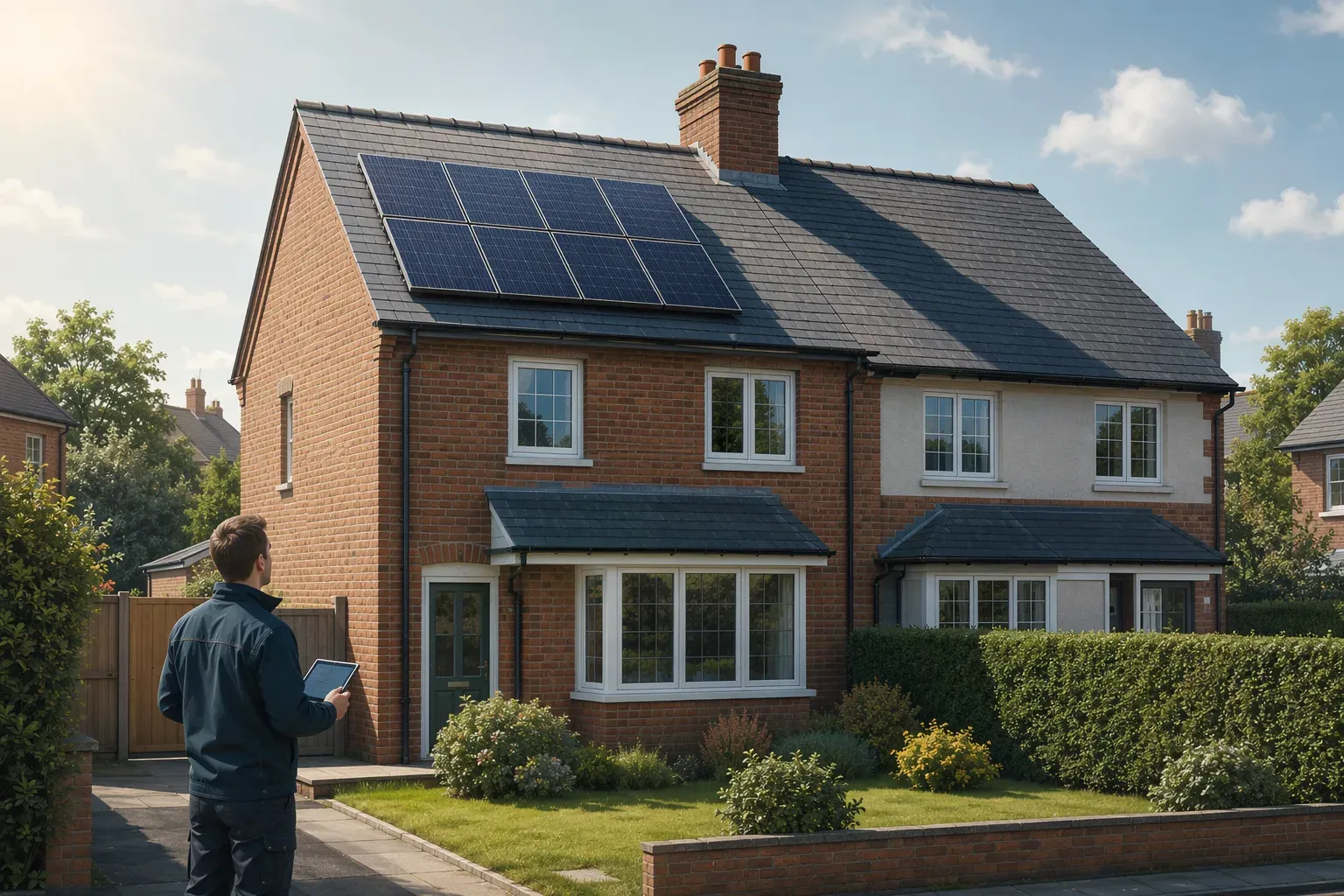
Choosing a solar installer starts with a clear description of your property and a set of questions that make quotes comparable. Ask about roof suitability, the proposed equipment, generation assumptions, permissions and aftercare. A low headline price is not enough to judge whether a system fits your home.
UK guide. Sources and policy references checked on 15 November 2026.
What should you ask a solar installer first?
Ask who will survey the property, design the system and take responsibility for the installation. Confirm the legal business name on the contract, whether subcontractors will be involved and who handles problems afterwards.
Check any claimed certification yourself. MCS's installer search lets you look up businesses and their certified technologies. A general directory profile, a manufacturer logo or an electrician qualification is not a substitute for checking a specific solar PV certification claim.
Energy Saving Trust recommends getting at least three installer quotes. Send each business the same starting information so differences in price do not simply reflect different work.
Give each installer the same property brief
Prepare your postcode, roof photographs taken safely from the ground, approximate roof age and any planned repairs. Note chimneys, nearby trees, roof windows and buildings that could cast shade. Include recent annual electricity use in kWh, not just the amount you pay.
Explain when you use electricity. A household occupied during the day has a different usage pattern from one where most demand starts after work. Mention planned changes such as an electric car or heat pump, but keep current use separate from estimates. If either is part of your plans, use our EV charging planning guide or heat-pump property checklist to identify the information to discuss with each installer.
A useful enquiry might read: “We have an east–west roof, a chimney on the rear slope and mostly evening electricity use. Please assess the roof and shading, and quote for panels alone, with a battery shown as a separate option.” This is an illustrative brief, not a claim about a completed project.
Ask how the roof affects the design
Roof direction is only one part of suitability. Energy Saving Trust explains that shading can have a major effect on generation, including on an otherwise favourable roof.
Ask the installer:
- How have you assessed shade across the day and year?
- What usable roof area remains after obstructions and installation requirements?
- Does the roof need repairs or a structural assessment first?
- Why have you selected this panel layout and inverter?
- If optimisers or microinverters are proposed, what problem do they address here?
Do not climb onto the roof to gather information. Leave roof access, structural checks and electrical inspection to the relevant professionals.
Separate system size from promised output
A solar array's rated capacity, usually given in kWp, is not its annual electricity generation. Annual generation estimates are normally expressed in kWh. Ask for both, with the assumptions behind the estimate.
Then ask how much generated electricity you are expected to use directly and how much you might export. Those are different values in a financial calculation. An estimate based on high daytime consumption may not suit an evening-heavy household.
If a battery is included, ask for its usable capacity, warranty conditions, expected operating approach and any ongoing software costs. Request a panels-only comparison. A battery changes the timing of electricity use; it does not create extra solar generation.
Make the written quotes comparable
Use a simple comparison sheet rather than comparing the totals alone.
| Item | What the written quote should clarify |
|---|---|
| Equipment | Panel and inverter models, rated array capacity and battery specification if included |
| Site work | Scaffolding, roof work, cable routes and electrical alterations |
| Approvals | Who checks planning requirements and handles network paperwork |
| Financial model | Import and export prices, self-use assumptions and costs included |
| Aftercare | Workmanship cover, product warranties, exclusions and contact route |
Ask what is excluded, whether taxes are included where applicable and what could trigger a variation after the survey. Get the payment schedule and cancellation terms in writing before paying a deposit.
Check permissions and export arrangements separately
Do not assume every roof installation follows the same planning rules. Ask for the relevant checks for your UK nation and property, particularly for listed buildings, protected areas or unusual sites. If you rent or own a leasehold property, establish the necessary owner's consent.
Ask who handles the electricity network application or notification, what approval is required and whether an export limit affects the design. Get any dependency on approval recorded before agreeing the installation timetable.
The Smart Export Guarantee applies to eligible installations in Great Britain, not Northern Ireland. It is not an automatic promise of an export payment or a fixed rate. Check the chosen supplier's current eligibility, metering, certification and tariff requirements before using export income in your budget.
Agree what happens at handover
Ask for the commissioning records, applicable installation certificates, warranty documents and a demonstration of the monitoring and shutdown arrangements. Find out how you report a fault and whether an inverter or battery warranty includes labour as well as replacement equipment.
Keep the design, quote and final documents together. If equipment changes during the project, ask for the revised specification and explanation before accepting the change.
Next step: search for solar providers
UK Energy & Renewables helps you discover energy businesses by category and location. Finding a business in the directory is not an endorsement: check its credentials, written proposal and suitability yourself.
Search the directory using a solar keyword and your town or postcode, with your property brief ready.